The city that grows things — trees, trams and a river reclaimed from the edge
01 Living in the green
Nantes won the European Green Capital award in 2013, and unlike some cities that carry the title politely for a year and move on, it has treated the designation as a starting point rather than a finish line. The result, a decade-plus on, is a city that feels genuinely different — not in a hair-shirt way, but in the daily texture of life here.
Start with what you see. Nantes has planted street trees, multiplied pocket parks and committed to greening its cours and squares in ways that register on a hot July afternoon — which, these days, you notice. The city centre breathes differently from most French cities of comparable size. The place Graslin quarter has the civic weight of a Haussmann boulevard but without the suffocating traffic; the Jardin des Plantes, one of the finest botanical gardens in France, sits five minutes from the main station and remains, improbably, a neighbourhood park rather than a tourist trap.
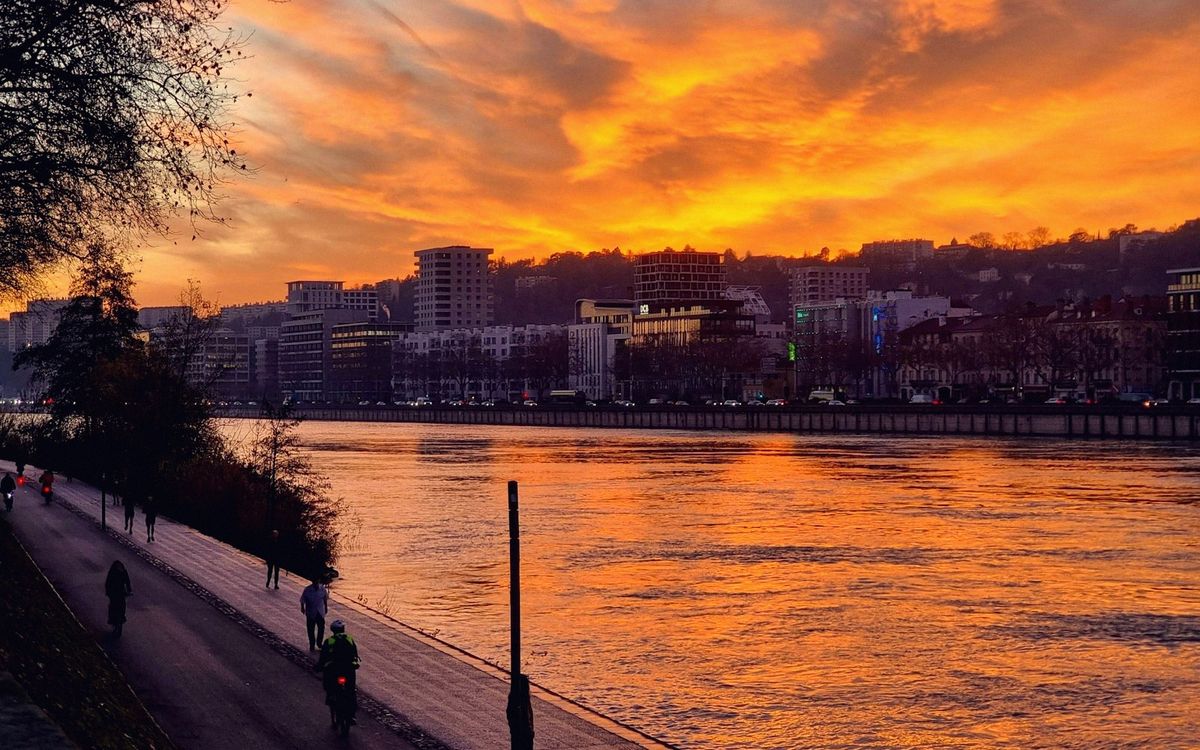
The water, once hidden behind a wall of traffic and warehousing, is now the city's living room.
Then there is the tram. Nantes reintroduced its tram network in 1985 — the first French city to do so, at a time when tramways were considered finished — and the network now forms the backbone of a transport system that genuinely works. Buses, Chronobus rapid lines and the Navibus river-ferry connect a city that has quietly made car-dependency optional for most of its residents. Not everyone has made that switch, but the infrastructure is there to make it easy to try.
The Loire is perhaps the most striking story. For decades the riverbanks were taken over by roads and industry; the river was something you crossed, not something you used. The long reclamation of the quays has transformed the south side of the city and the Île de Nantes into places where people run, picnic, cycle and swim — sometimes literally, in the floating pools moored to the bank in summer. The water, once hidden behind a wall of traffic and warehousing, is now the city's living room.
None of this is perfect. Urban sprawl along the Loire estuary, ongoing car use in the outer districts and the pressures of a fast-growing city mean the green credentials are real but contested. Nantes is a work in progress, and the locals will tell you so. What they'll also tell you — if you catch them cycling along the quays at dusk on a warm evening — is that it mostly works.