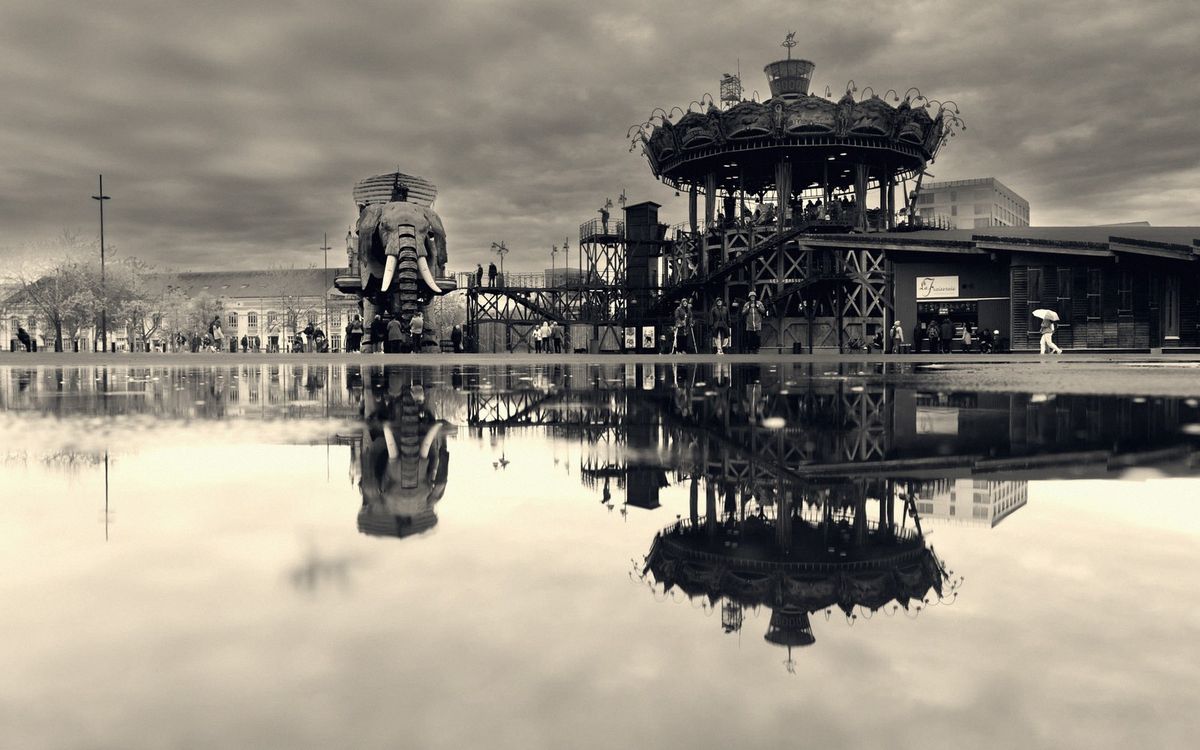
A workshop where Jules Verne meets Leonardo da Vinci, and a 48-tonne elephant walks along the riverbank — Nantes's most improbable creation turned out to be its most defining one.
01 The idea that shouldn't have worked
When the shipyards of the Île de Nantes closed in the 1980s, they left behind enormous sheds, rusting cranes and a gaping question about what an industrial island in the middle of a French city was supposed to become. The answer that emerged — over years of civic reinvention — was not a shopping centre or a luxury waterfront development. It was a workshop for building impossible creatures.
The Machines de l'île was born from the collaboration of two artists: François Delarozière, a scenographer and mechanical builder, and Pierre Orefice, a producer and creative director. Their proposition was as simple as it was absurd: to inhabit the old Nantes shipyard buildings with mechanical animals drawn from the imaginary world that Jules Verne — born in Nantes in 1828 — and Leonardo da Vinci might have shared. The ocean as one realm, the air as another, the jungles of a third. Equal parts theatre, engineering and civic statement.
It is not a theme-park ride. It walks. Slowly. Its trunk sprays water.
The city backed it. In 2007, the Machines opened to the public in the former Halles des chantiers on the island's western tip. That industrial architecture — raw iron, high ceilings, river light flooding through — turned out to be the perfect habitat for what came next.
02 What actually lives here
The Grand Éléphant is the machine that made the city famous beyond France. A 48-tonne, 12-metre-tall walking elephant built from steel and timber, it carries up to 49 passengers on its back and in a basket beneath its belly, lumbering out from the machine hall and across the esplanade with a hiss of steam and a movement so improbably organic you stop trusting your eyes. It is not a theme-park ride. It walks. Slowly. Its trunk sprays water. Children fall silent for a moment before they scream with delight, and so, quietly, do adults who thought they were past all that.
Inside the main gallery, the Carrousel des Mondes Marins is the other set piece: a three-storey mechanical carousel of deep-sea creatures — a giant crab, a luminous jellyfish, a sea serpent — that visitors can actually board and ride. Designed with the obsessive craft of a clock, it runs as a performance as much as an attraction: the lights, the movement, the sheer accumulated strangeness of it. Watching it from the outside, you begin to understand what Delarozière and Orefice were actually building, which is a mythology for a city that had lost the one it had.
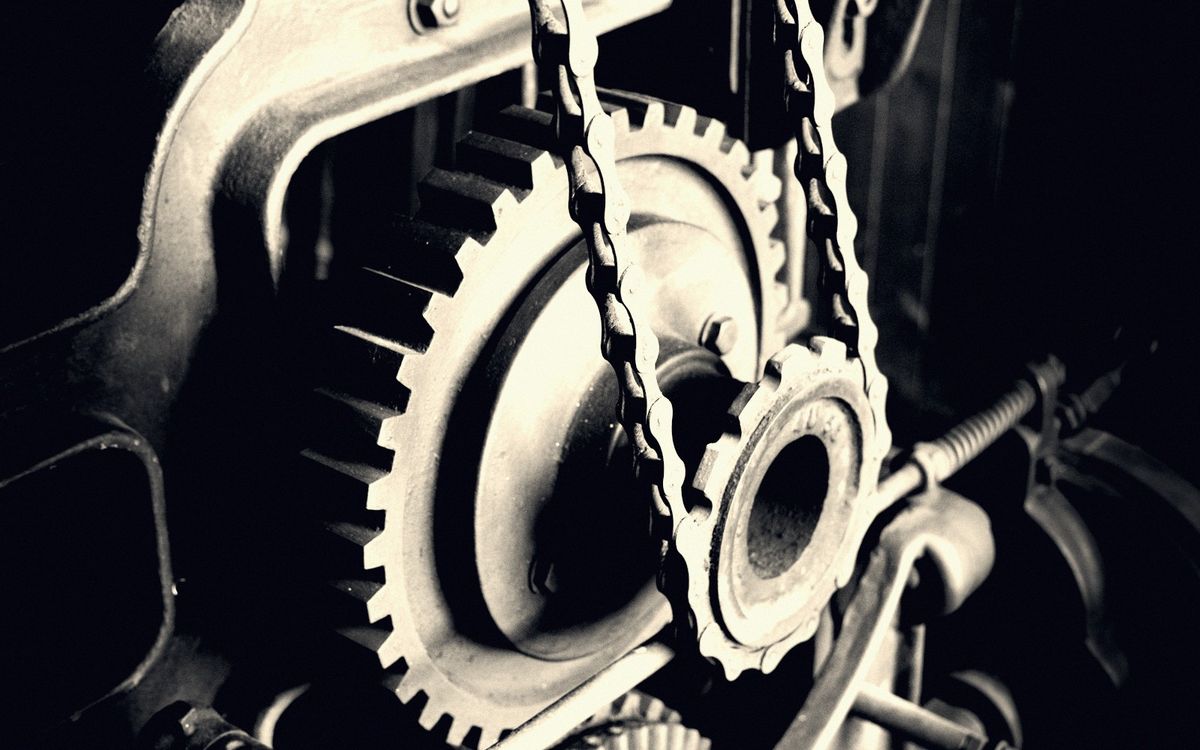
The gallery space also functions as a working atelier. The machines are not finished — they are never finished — and visitors who look through the workshop windows can see new creatures in mid-construction. This is not theatrical dressing. The Machines genuinely evolve: a Heron tree was in development for years, an aerial garden to carry visitors into the canopy. The process is visible and ongoing, and that openness to the unfinished is part of the philosophy.
03 Why it matters beyond the spectacle
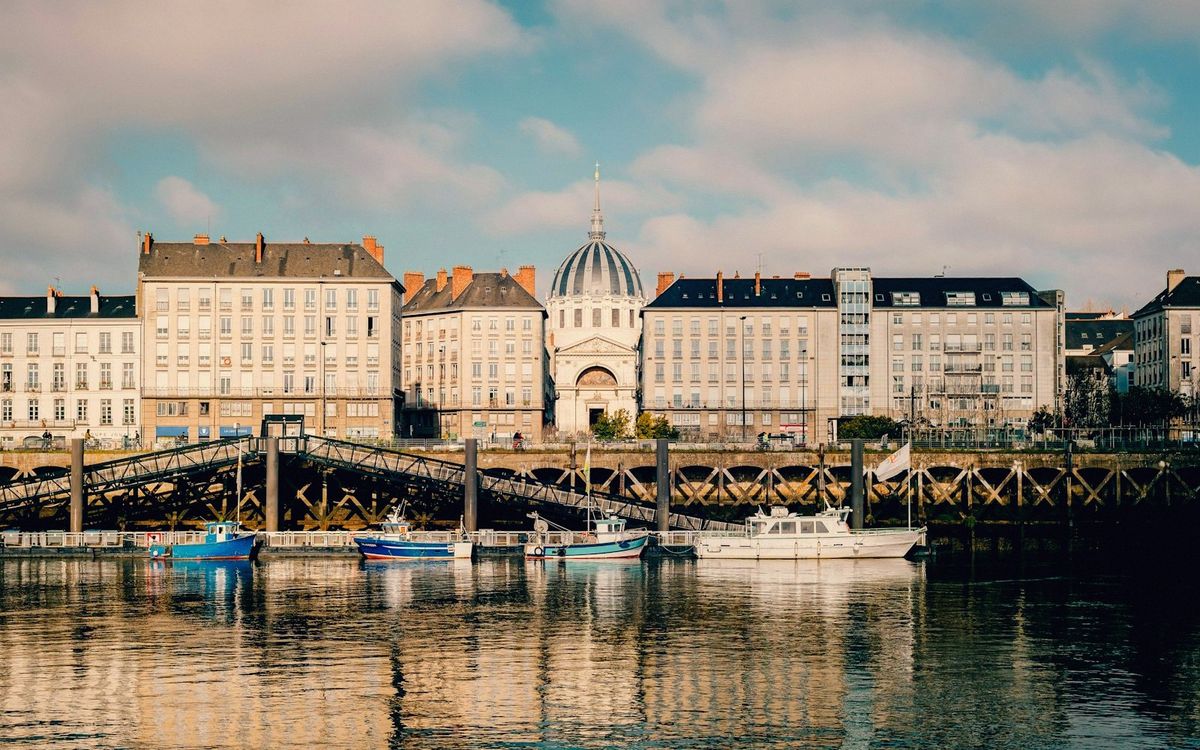
Nantes had Jules Verne, and for a long time that felt like a footnote. The Machines de l'île turned the coincidence of his birthplace into something structural — an ongoing act of imagination that the city could point to and say: this is how we think. The creative reinvention that saved the Île de Nantes didn't happen in spite of the city's industrial past; it happened because of it. The shipyard cranes are still standing on the island as monuments. The machine hall is still a machine hall. The Île de Nantes as it exists today is one of the more honest pieces of urban transformation in Europe, and the Machines are its heart.
The queues in summer are real. Book the Elephant in advance — it sells out. Come on a weekday morning if you can, and get there before the tour buses, when the esplanade is quiet and the Éléphant emerges into river light without an audience. That is the version that stays with you.
The Machines de l'île are in the former Halles des chantiers on the western tip of the Île de Nantes. Access by tram (line 1, Chantiers Navals stop) or on foot across the Pont des Trois Continents.
Time How it happened
- 1980sNantes shipyards close, leaving the Île de Nantes industrial and largely vacant
- 2007Machines de l'île opens in the former Halles des chantiers
Who The people
François Delarozière
Scenographer · co-creator
Designer and builder of the Grand Éléphant and the Carrousel des Mondes Marins.
Pierre Orefice
Producer · co-creator
Turned Jules Verne's birthplace into a working atelier of impossible creatures.