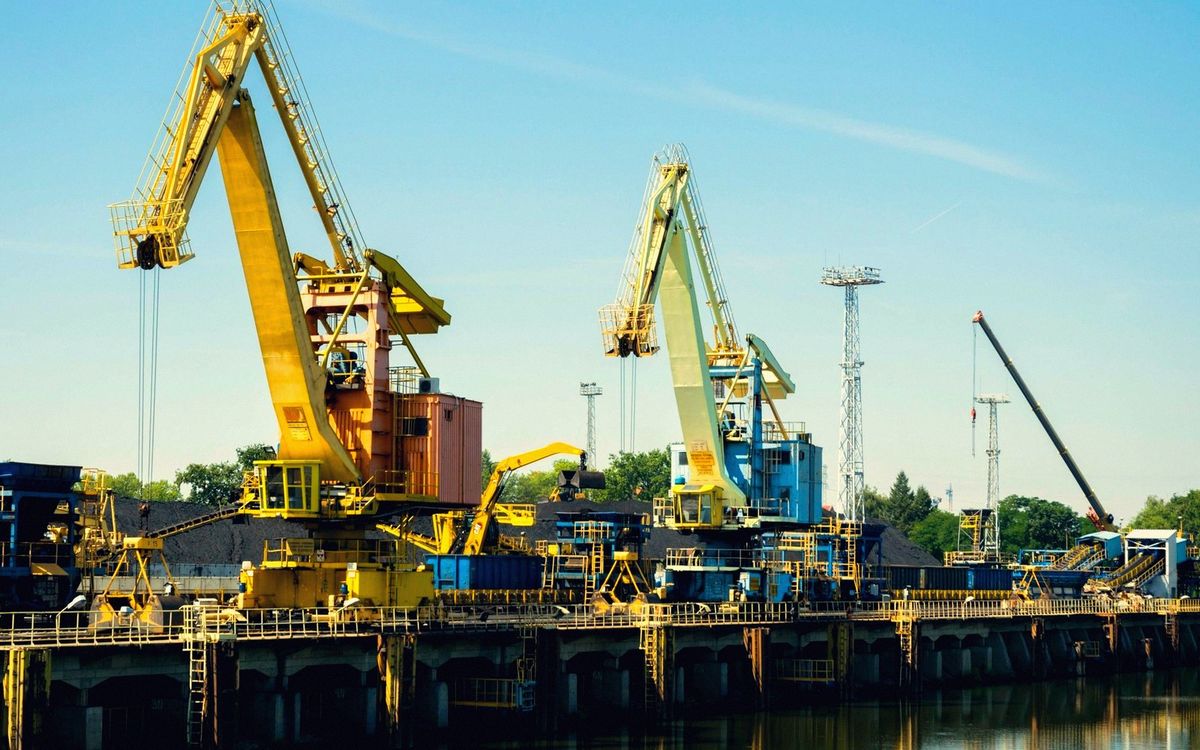
The island up close — the shipyard cranes kept as monuments, the Machines, the art school, and the most watched urban-renewal project in France.
01 The island that remade a city — and is still doing it
Nantes sits on the Loire, and the Loire splits around a long, thin sliver of land that spent most of the twentieth century rusting quietly into irrelevance. The Île de Nantes was a working island: shipyards, biscuit factories, industrial muscle. When the last yard closed in 1987, it left behind six kilometres of cranes, slipways and corrugated-iron sheds — and an awkward silence. What happened next became the most closely watched urban-renewal project in France, and one of the most cited in Europe.
The island's reinvention didn't begin with a wrecking ball. That's the first thing to understand. The cranes stayed. The slipways stayed. The scale and the grit of the place became the raw material rather than the problem to be solved. Architects Alexandre Chemetoff and Jean-Louis Berthomieu produced their "Plan-Guide" for the island in 2000, and its key insight was deceptively simple: build around what exists, not over it. The result is an urban landscape unlike anywhere else in France — part memory, part invention, always unfinished in the best sense.
The cranes stayed. The slipways stayed. The grit of the place became the raw material rather than the problem.
02 Walking the island today
Cross the Pont Anne-de-Bretagne from the south bank of the city centre and you arrive in what feels, on your first visit, like a place mid-sentence. That's because it is. Western and central sections of the island have been transformed over the past two decades; the eastern third is still being written. Construction cranes — real ones this time, working ones — punctuate the skyline alongside the old yards' monuments.
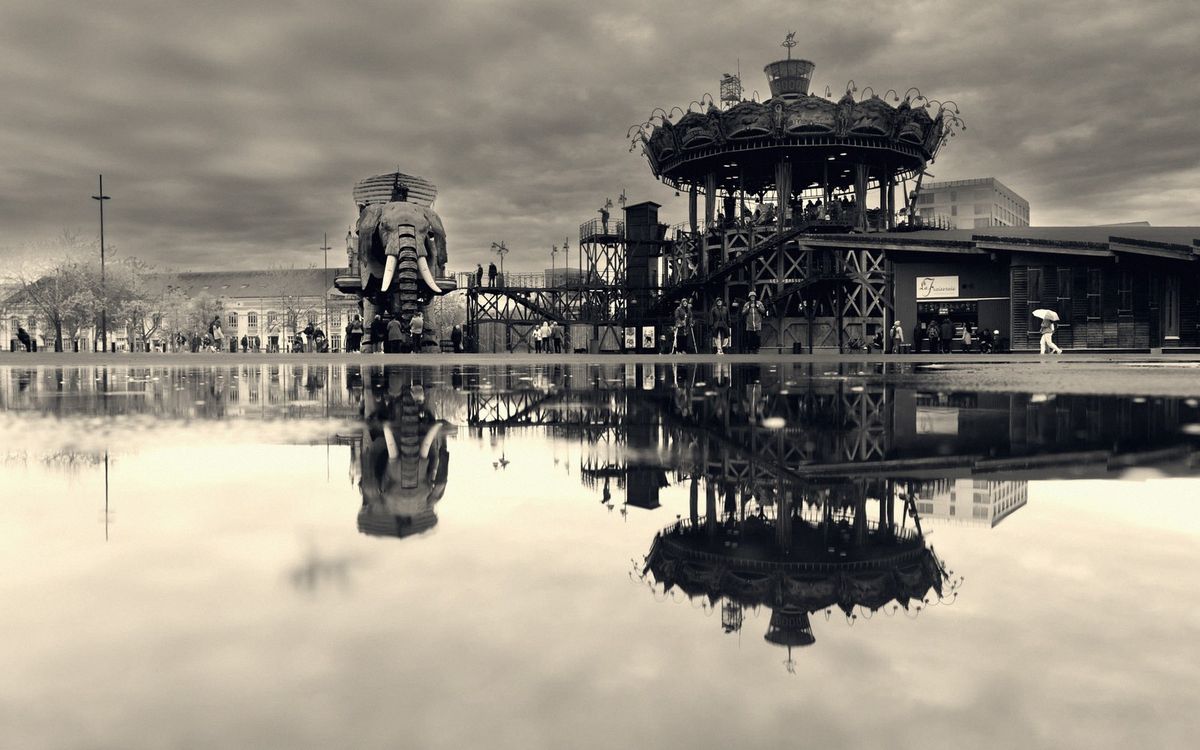
The western tip is where most visitors go first, and rightly so. This is where the Chantiers de l'Atlantique legacy is most visceral: massive yellow gantry cranes have been preserved as industrial sculpture along the riverbank, framing the Esplanade des Chantiers. Next to them, inside a former shipbuilding hall, is the home of the Machines de l'Île — the workshop, gallery and theatre of operations for François Delarozière and Pierre Orefice's mechanical universe. The Great Elephant, twelve metres tall and capable of carrying fifty passengers through a slow walk along the quays, has become the image of the city. The Carousel of the Marine Worlds adds three storeys of oceanic imagination. This is not a museum of the island's past — it is something stranger and more alive: a working atelier that happens to be open to the public.
Follow the quai des Antilles east from the Esplanade and the island reveals its layers. Converted warehouses house architecture firms, creative agencies and independent restaurants. New apartment blocks — some outstanding, some ordinary — have grown up around the preserved industrial bones. The mix is honest: this is a neighbourhood being lived in, not a heritage quarter curated for photographs.
03 The Quartier de la Création
The island's cultural ambition is concentrated in the Quartier de la Création, centred on the former abattoir site in the island's middle section. The École des Beaux-Arts de Nantes (now ESBANM — the École Supérieure des Beaux-Arts Nantes Métropole) relocated here, bringing students, studios and the particular low-grade creative electricity that art schools generate wherever they land. The buildings around them followed: design studios, performing-arts spaces, the regional contemporary art fund's facilities.
The ambition of the Quartier de la Création was always to make the island France's foremost creative district — not a branded hub on a PowerPoint slide but a working concentration of people who make things. The result is mixed in the way that honest ambitions usually are: genuinely animated during the university year and during the summer's Le Voyage à Nantes season, quieter in between. But the fundamentals are solid. The island now has the density of cultural institutions that sustains a neighbourhood rather than a project.
04 Still unfinished, deliberately so
The eastern end of the island remains the frontier. The Pirmil-les-Isles project — one of the largest urban-development zones in western France — is extending the reinvention across the Loire's south channel toward the communes of Rezé and Saint-Sébastien-sur-Loire, stitching the island into a wider metropolitan fabric. New footbridges, a restructured tram network, new public spaces: the plan extends to 2037 and beyond.
What keeps the Île de Nantes interesting — genuinely interesting, not just to urban planners — is the refusal to declare itself finished. The Chemetoff plan-guide was designed to evolve, and it has. New architects have taken over sections, new programmes have been added, and the island absorbs them without losing coherence. The scale of the place helps: several kilometres long and a few hundred metres wide, there is room for things to happen without overwhelming each other.
Nantes is justifiably proud of what the island has become, but the Nantais are not naive about it. Rents have risen as the neighbourhood has matured. The creative-class concentration brings the tensions that creative-class concentrations always bring. And the eastern development will require the same care — the same willingness to leave things a little open — that the western sections have benefited from.
Come on a weekday morning, walk the quays before the Machines open, find a coffee at one of the island's quieter spots, and watch the construction. The island is still being made, and that is precisely the point.
Time How it happened
- Pre-1987island functions as working industrial zone: shipyards, factories
- 1987last shipyard closes; island enters post-industrial silence
- 2000Chemetoff/Berthomieu Plan-Guide published; island renewal begins
- 2000s–2010sMachines de l'Île established; Quartier de la Création developed
- OngoingPirmil-les-Isles development extends renewal eastward toward 2037
Who The people
Alexandre Chemetoff
Urban planner
Co-author of the island's Plan-Guide — build around what exists, not over it.
Jean-Louis Berthomieu
Architect
Co-author of the Plan-Guide that reimagined six kilometres of shipyard as a living palimpsest.