The practical life — getting around, what a life here costs against Paris, and the rhythm of a city that works to live rather than the other way round.
01 A city that doesn't make you choose between a career and a life
Paris extracts a toll. It's there in the commute times, the rents, the sheer compression of urban life. Nantes doesn't ask for that. The city has spent two decades building itself into somewhere genuinely pleasant to inhabit — not as a branding exercise, but in the ordinary sense: getting to work without dread, finding somewhere decent to live on a real salary, having time left over at the end of the day.
02 What it actually costs

Rents run at roughly half the Parisian rate for comparable space. A proper two-bedroom apartment in Zola, Canclaux or around the Gare de Nantes is findable without the frantic ritual of Parisian flat-hunting. Buying is still within reach for dual incomes in a way that feels almost quaint compared to Lyon or Bordeaux. Food stays affordable: the Talensac market delivers excellent Atlantic and Loire produce at prices that make sense, and eating well here doesn't require a special occasion.
03 Getting around
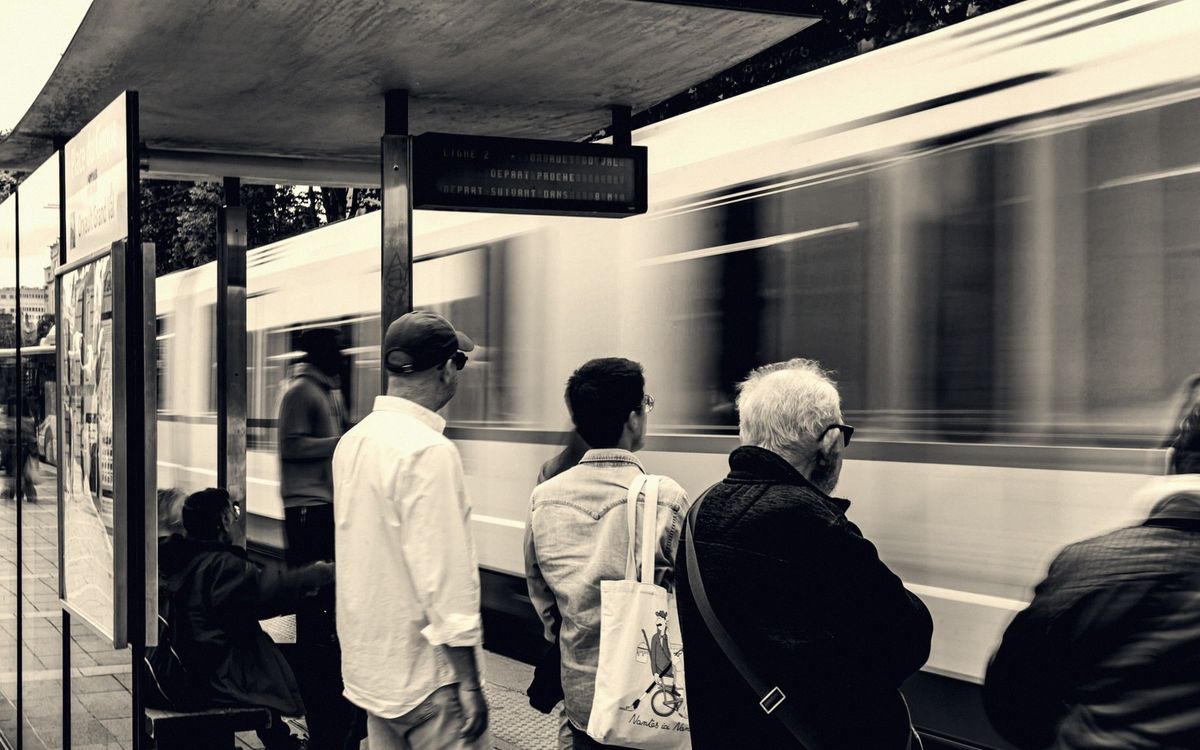
The tram network — three lines threading across the city — does most of the heavy lifting. Cyclists are taken seriously: a comprehensive network of lanes connects the city's quarters, and the topography cooperates (Nantes is flat). The Navibus, a river shuttle across the Loire, is not a gimmick. For many residents on the south bank, it's the commute. Car ownership is perfectly possible, but entirely optional.
04 The rhythm
The thirty-five hour culture is real, and Nantes leans into it. Workers from Paris-based firms working remotely in Nantes report a structural shift: the city doesn't do the ambient pressure thing. Lunch is still lunch. The terraces fill at six. The Loire is ten minutes from almost anywhere. That's not nothing.