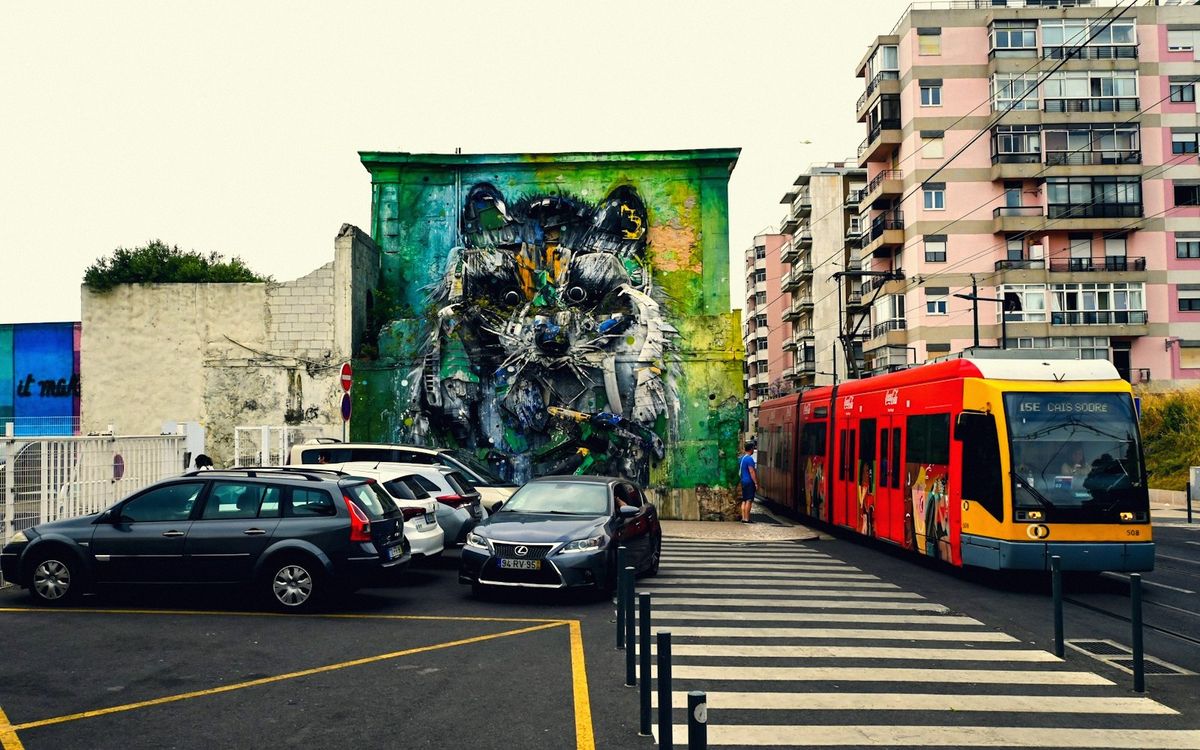
Follow the green line and the city becomes the gallery.
01 Read the pavement, read the city
A thin green line is painted on the pavements of Nantes every summer, and if you follow it you'll cover roughly twelve kilometres of city — from the château des ducs de Bretagne out to the Île de Nantes — threading past monumental installations, quiet interventions and works that have quietly become permanent fixtures. This is Le Voyage à Nantes: part festival, part curated trail, part ongoing argument that the city itself is the exhibition.
The line reappears each year, but many of the works it connects are there year-round. The giant mechanical elephant that stamps and sprays its way across the island, the surreal rooftop figures you spot from a moving tram, the repurposed cranes standing over the former shipyard as monuments to industrial memory — these are not temporary installations but permanent landmarks now, worked into the grain of Nantes the way the Loire is.
You stop noticing where the artwork ends and the city begins.
That's the trick the trail pulls off. Walking it, you stop noticing where the artwork ends and the city begins. A staircase becomes a composition. A warehouse becomes a canvas. A courtyard you'd never have found alone suddenly opens into something extraordinary. Locals do the trail in pieces — a section on a Sunday, a detour after market on a Saturday morning — because the line isn't going anywhere. It rewards that unhurried pace, a little attention, and the willingness to look up.
Pick up a printed map from the tourist office or download the app. Then just follow the green line and see where it takes you.